Skip to content



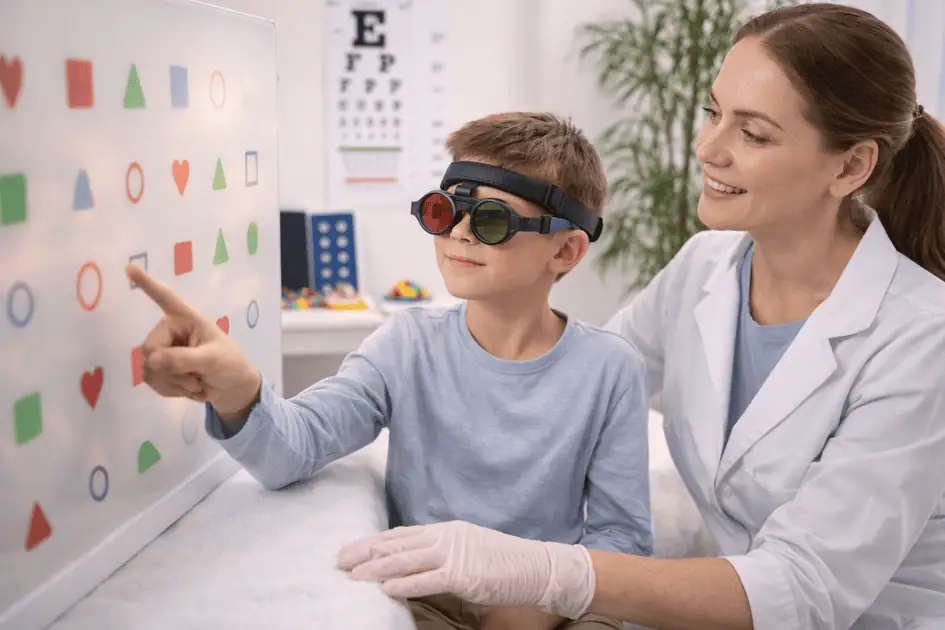
Table of Contents
Hearing “lazy eye” about your child can feel confusing and stressful, especially if they already have glasses and things still do not look quite right. The good news is that many kids have more than one tool available to support stronger vision.
That is where Vision Therapy fits in. At Rosley Eyecare, we offer Vision Therapy. Are you near Glenview? If you are seeking Vision Therapy in Glenview, IL, our medical team will help you determine whether this treatment aligns with your eye needs.
What Lazy Eye Really Means
Lazy eye is the common term for amblyopia. In simple terms, one eye does not see as clearly because the brain has learned to rely more on the other eye. Over time, the “weaker” eye gets less practice, so the brain keeps favoring the stronger one.
Three common reasons this can happen in childhood:
- Eye turn (strabismus): If the eyes are not aligned, the brain may ignore one eye to avoid double vision.
- Unequal prescription (anisometropia): If one eye is much more nearsighted, farsighted, or has more astigmatism, the brain may choose the clearer image and tune out the blurrier one.
- Vision deprivation: Something blocks clear images from reaching the eye (for example, a cataract), which can limit development.
Why does timing matter? Children’s visual systems are still developing. The earlier a vision issue is identified, the more opportunities there are to guide healthy visual development with the right plan.
How Vision Therapy Works
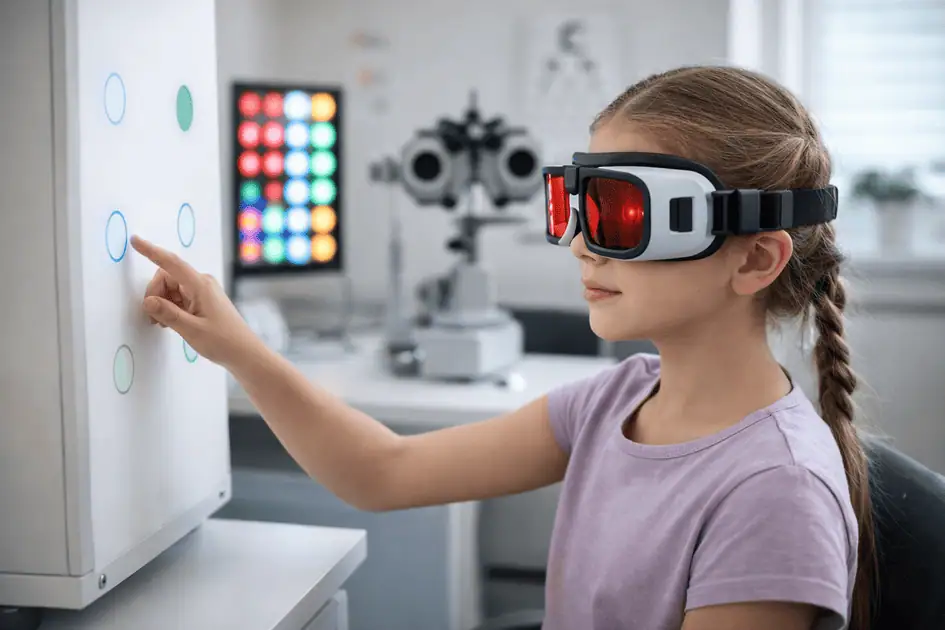
Think of therapy as training, not a quick switch. Vision therapy for lazy eye is designed to improve the coordination between the eyes and the brain so that the weaker eye can contribute more effectively and comfortably. At Rosley Eyecare, it is described as a personalized, non-surgical treatment program aimed at improving how the eyes and brain work together.
In many plans, the focus is on skills such as:
- Eye coordination (working together as a team)
- Tracking (following a moving target smoothly)
- Focusing (shifting and sustaining focus)
- Visual processing (how the brain interprets what the eyes see)
It also helps to understand what therapy is not. Glasses or contacts correct the “input” by making the image clearer. Therapy trains “how the system uses the input.” That is why a child can have the right prescription and still struggle.
If you have searched for Amblyopia vision therapy, you have probably seen the phrase “individualized plan” repeated. That is for a reason. A child’s treatment needs depend on what is causing the amblyopia and which skills are lagging, so progress is monitored, and the plan is adjusted as your child improves.
What Parents Can Expect
At Rosley Eyecare, a plan begins after a comprehensive exam and is structured with in-office sessions plus at-home activities. Your child’s evaluation may include not only prescription testing but also functional vision testing to assess how the eyes team, track, and focus.
A typical rhythm often includes:
- Guided in-office activities with a trained team
- A home routine that is specific and doable, not random “try this app” advice
- Check-ins to measure progress and adjust the difficulty
Parents play a bigger role than many expect, not by “teaching” the therapy, but by helping with consistency and noticing patterns. If your child is resisting home practice, complaining of headaches, or suddenly avoiding reading, those details help your provider refine the plan.
How progress is usually measured:
- Visual skill improvements (better tracking, steadier focusing, improved teaming)
- Symptom changes (less fatigue, fewer headaches, improved comfort)
- Functional changes (reading fluency, attention during near work, better hand-eye coordination)
If you have been looking up Eye exercises for lazy eye, it is worth noting that “exercises” are most helpful when they are prescribed and monitored, because the goal is not just to do activities. It is a skill that changes over time.
How Vision Therapy Fits With Other Lazy Eye Treatments
Lazy eye treatment is often a combination approach. Depending on the cause and your child’s needs, your care plan may include:
- Prescription lenses
- Patching (occlusion)
- Atropine drops, when prescribed
- Vision therapy activities are designed to build specific skills
This is especially relevant for families dealing with Lazy eye not improving with glasses. Rosley Eyecare also offers CureSight by NovaSight, a digital therapy option for children with amblyopia that uses eye-tracking technology and engages kids with web-based content. It is positioned as an alternative to traditional patching for some families.
Signs Your Child May Need An Evaluation
Some kids never complain, because they assume everyone sees the way they do. Others complain, but it sounds vague. If you are noticing any of the signs below, it is worth scheduling an evaluation.
Visual signs:
- Squinting, closing one eye, and frequent blinking
- Head tilt or turning the head to see
- An eye that appears to drift in or out sometimes
Functional signs:
- Bumping into things, trouble judging steps or distances
- Avoiding coloring, puzzles, or reading
- Losing their place often when reading
What kids may actually say:
- “My eyes are tired.”
- “Words move,” or “things look blurry.”
- Headaches after schoolwork
If you are searching for Lazy eye correction in children, the first step is always the same: a proper diagnosis of what is driving the amblyopia and whether other vision skills are involved.
Who is a Good Candidate
In general, earlier support is helpful because the visual system is still developing in childhood. That said, older kids can still make progress, depending on the type and severity of amblyopia and the consistency of the treatment plan.
Factors that affect fit and outcomes:
- The cause of amblyopia (eye turn vs unequal prescription vs deprivation)
- Whether strabismus is present and how it is being addressed
- Consistency with home practice and follow-ups
- Your child’s comfort and engagement with the program
Parents often ask about Non-surgical treatments for lazy eye, and that is where a well-structured plan matters. Vision therapy is non-surgical and not “one-size-fits-all.” At Rosley Eyecare, plans are tailored after a comprehensive exam and include in-office and at-home components.
One more practical point: if you are seeing content about Exercises to strengthen the weak eye, treat it as a conversation starter, not a treatment plan. Your child’s provider can help you understand which skills are actually weak and which activities are appropriate and safe.
A good consultation should leave you feeling clear, not overwhelmed. These questions can help you stay focused and ensure you understand the “why” behind the plan, especially if you are meeting a Pediatric optometrist for lazy eye specialist for the first time.
Glow Up Your Eyes
Rosley Eyecare provides a thoughtful, child-friendly approach to lazy eye care, starting with a comprehensive evaluation and building a personalized plan that may include glasses, structured therapy, and guided home practice. Take the first step to a clearer vision. Meet a pediatric optometrist for lazy eye today.