Skip to content



Table of Contents
Parents naturally watch their child’s growth, learning, and comfort closely. Vision is a major part of that development, even when a child cannot explain that something looks blurry, tiring, or hard to focus on.
At Rosley Eyecare, early pediatric eye exams support your child’s development by finding vision problems that can affect learning, reading, coordination, confidence, and daily comfort before they affect school or growth.
How do pediatric eye exams support a child’s development?
Pediatric eye exams detect vision and eye health issues that can impact reading, learning, focus, coordination, and comfort. They provide parents with clearer guidance as visual skills develop.
Why Pediatric Eye Exams Matter Early
Children use their eyes to follow words on a page, copy from a worksheet, catch a ball, and move through busy spaces. When vision is unclear or the eyes are not working together well, those everyday tasks can become more tiring than they should be.
That is why pediatric eye exams in Glenview, IL, are helpful even when a child seems fine. Many children do not know how to describe blurry vision, eye strain, or focusing trouble. They may simply avoid reading, sit close to screens, rub their eyes, or get frustrated during homework. A professional exam gives parents answers before vision concerns affect confidence or classroom participation.
How Vision Connects To Learning And Development
Healthy vision helps children absorb information and respond to their environment. In school, it supports reading, writing, attention, and shifting focus between near and far. During play, it aids balance, depth perception, hand-eye coordination, and sports.
A child with an uncorrected vision concern may work harder to complete simple tasks. Losing place while reading, skipping words, needing breaks, or seeming distracted can sometimes be related to visual comfort. During a children’s eye exam, Rosley Eyecare evaluates focusing ability, eye coordination, depth perception, tracking, and overall eye health.
When Children Should Start Getting Eye Exams
Early childhood is an important time for visual development, so parents do not have to wait until school starts or until a child complains. Infants, preschoolers, and school-aged children can all benefit from age-appropriate eye care.
Rosley Eyecare notes that comprehensive exams are commonly recommended at around six months of age, again at age three, and before starting school. After that, many children are seen every one to two years, depending on age, symptoms, eye health, and the eye doctor’s recommendation.
What A Pediatric Eye Exam Can Detect
A pediatric eye exam can identify nearsightedness, farsightedness, and astigmatism, which can affect near or distance tasks. Exams can also help detect lazy eye, also called amblyopia, and eye alignment concerns such as strabismus. These concerns can affect how the eyes and brain work together during development.
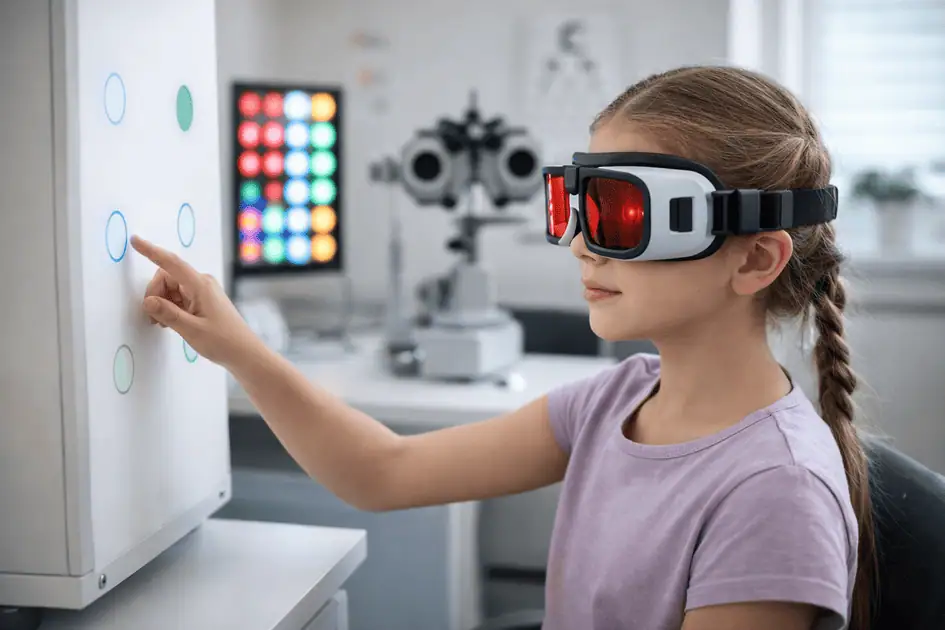
During a kid’s eye doctor exam, the optometrist may also evaluate focusing, tracking, depth perception, and how comfortably the eyes are teaming. Rosley Eyecare also offers related care when appropriate, including Myopia Management for children with progressive nearsightedness and Vision Therapy for certain focusing, tracking, or eye coordination concerns.
Why School Vision Screenings Are Not The Same As Eye Exams
A pediatric vision screening can be helpful, but it is not the same as a comprehensive eye exam. Screenings often flag obvious concerns, especially distance vision, but they may not fully evaluate how the eyes focus, track, team together, or stay comfortable during close-up work.
This means a child may pass a school screening and still struggle with reading, headaches, eye strain, or visual fatigue. Comprehensive vision testing for children gives a broader view of eye health and visual function, which can help parents understand homework avoidance, focus issues, or frustration.
Signs Your Child May Need An Eye Exam Sooner
Some children need an eye exam before their next routine visit. Parents may notice squinting, sitting close to the television or tablet, covering one eye, frequent blinking, or frequent eye rubbing. Other children may mention headaches, tired eyes, or discomfort after reading.
School-related signs can also matter. A child may avoid books, lose their place while reading, skip lines, have a short attention span with close-up tasks, or struggle to see the board. During play, vision concerns may show up as clumsiness, poor hand-eye coordination, or trouble tracking moving objects.
How Early Vision Care Supports Long-Term Confidence
When children can see clearly and use their eyes comfortably, everyday activities often feel less frustrating. Reading, writing, sports, classroom participation, and play all depend on visual skills in some way.
Early care can help children feel more confident when schoolwork becomes easier to see, headaches lessen, or they understand why certain tasks felt difficult. While an eye exam cannot guarantee academic success, it can help identify vision-related barriers that may be hindering progress.
Regular pediatric eye care also supports ongoing eye health for kids. As children grow, their vision can change, and routine exams help families make informed decisions before a concern becomes disruptive.
When To Schedule A Pediatric Eye Exam In Glenview
Parents in Glenview may want to schedule an exam if their child has symptoms, has not had a recent comprehensive eye exam, failed a screening, or is getting ready for school. It can also be a smart step if there is a family history of vision problems or if a teacher has raised concerns about reading, focus, or classroom performance.
At Rosley Eyecare, pediatric exams are designed to evaluate vision, eye health, and visual development in a child-friendly way. Families looking for children’s vision care in Glenview, IL, can use an exam to understand better how their child is seeing and how their visual skills are developing.
A Clearer Start For Growing Eyes
Pediatric eye exams give parents important insight into how a child’s vision may be affecting learning, reading, coordination, comfort, and confidence. From early detection of common vision problems to guidance on visual development, regular care helps support children through every stage of growth. If you are ready to schedule your child’s visit, Book Now or contact us at Rosley Eyecare for caring pediatric vision support in Glenview.